 18005723861
 WhatsApp Us
 Follow us on LinkedIn
 Follow us on Instagram
 Follow us on Facebook
Extended Warranty vs Repair Costs: What Customers Should Know
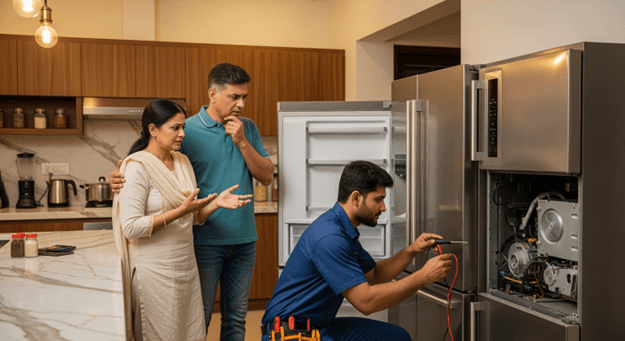
In today’s world, home appliances and gadgets are no longer optional—they are essential. From refrigerators and air conditioners to laptops and washing machines, we depend on them daily. But when these devices break down, the biggest question customers face is:
Should you pay for repairs when needed or invest in an extended warranty?
Understanding the difference between extended warranty plans and repair costs can help you make a smarter financial decision.
What is an extended warranty, and how does it work?
Extended warranties start where your manufacturer's warranty ends. Most appliances come with a standard warranty that lasts one to two years. An extended warranty gives you an extra 1 to 3 years of protection against mechanical breakdowns and electrical failures.
The main difference between extended warranties and insurance is that warranties cover defects in the product and parts that break during normal use. You would need insurance in case of accidental damage. There are two kinds you'll see. Brands like Samsung, LG, and Whirlpool all offer warranties that are backed by the company. Third-party providers cover a wide range of brands and types of products.
Most plans include cashless service at authorized service centers, which means you don't have to pay out of pocket and wait for a refund. If you're looking at different plan structures, find out more about the coverage and Extended Warranty Benefits of an extended warranty.
Why repairs are hard to predict when common appliances and gadgets break down
Appliances don't break down on time. But when you look at repair data from thousands of homes, you can see some patterns.
Common Problems with Home Appliances
Refrigerators often have problems with their compressors, leaks in the cooling system, and broken thermostats. These problems usually happen between years 3 and 5. Replacing a compressor needs skilled workers and costly parts.
Motor burnout, drum bearing failures, and problems with the electronic control board are all common problems with washing machines. Moving parts wear out faster the more you use them.
Air conditioners have both electrical and mechanical parts, which means they can break down in two places. LED TVs are the worst for you. Problems with the panel, backlight, or motherboard can cost 60–70% of the price of a new unit. A TV that costs ₹65,000 but has a broken display panel? The repair will cost you between ₹40,000 and ₹45,000.
Laptops can have problems with their hard drives, batteries, screens, and motherboards. Smartphones have to deal with the same problems. Even small repairs need special tools and real parts, which makes the cost go up.
The pattern? Most problems happen right after the manufacturer's warranty runs out. That's when you have to pay for things out of your own pocket.
What to Expect When You Need to Fix an Appliance in India
When you compare the cost of an extended warranty to the cost of repairs, real numbers are important. Here are the real costs of major repairs in India's big cities and tier-2 cities:
Average Cost of Repair for Appliances and Gadgets
- Fridge: ₹6,000 to ₹12,000
- Washing machine: ₹3,500 to ₹8,000
- Air conditioner: ₹2,500 to ₹5,000
- Microwave: ₹3,000–₹6,000
- LED TV: ₹8,000 to ₹15,000
- Laptop: ₹5,000 to ₹12,000
- Smartphone: ₹2,000 to ₹8,000
These are major component failures, not small fixes. Parts for premium brands often cost more, but they offer better service availability. Authorized service centers in Mumbai and Delhi charge more than those in Jaipur or Coimbatore.
Is it worth it to get an extended warranty to protect against risk?
When you compare the cost of an extended warranty to the cost of repairs, you're not looking at what could happen; you're looking at what is likely to happen.
When an extended warranty is a good idea
The investment is worth it because the appliances are high-quality. A ₹3,500 warranty on a ₹50,000 refrigerator makes sense when a broken compressor costs ₹12,000. You're keeping something very valuable safe.
Using it a lot changes the math. That washing machine does 5 to 6 loads a week? It's under more stress than one that does two or three loads. Your financial cushion is also important. If a surprise repair costs ₹10,000 and you have to use money set aside for something else or go on a credit card, the ₹2,500 warranty will give you peace of mind.
Everything is about timing. When a product's warranty runs out, it becomes vulnerable. The best time to get coverage is between years 2 and 4, when the failure rates are highest.
When You Might Not Want to Do It
Cheap appliances don't add up. A ₹2,000 warranty on a ₹8,000 microwave isn't worth much when repairs only cost ₹4,000. Some products have a long history of being reliable. Before you buy coverage, make sure to look into your specific model.
Having a lot of money saved up for emergencies changes things. You can cover repair costs without worrying about money if you keep ₹50,000 in cash on hand for household emergencies.
Manufacturer's Warranty vs. Extended Warranty from a Third Party
The source of your warranty is important. This is how they stack up:
- Scope of Coverage — Defects and poor workmanship vs. Mechanical or electrical problems
- Network of Services — Only brand-authorized centers vs. Often a bigger service network
- Price — Included with purchase vs. ₹1,500 to ₹5,000 for appliances
- Flexibility — Fixed terms vs. Plans that can be changed
- Brand Coverage — Single brand only vs. Includes many brands
- Transferability — Not usually transferable vs. Usually transferable to new owner
What to Look for in a Third-Party Service
There is no room for negotiation on coverage transparency. You need clear lists of what is and isn't covered, as well as claim limits.
The size of the service network will decide if you really use the warranty. Before you buy, make sure the provider has authorized centers in your city. Look for providers that approve 85% or more of claims and process them in less than 48 hours.
Terms and conditions should be easy to read. Be on the lookout for too many exclusions, hidden deductibles, or maintenance requirements that are too high and will void your coverage.
Three Questions to Ask Yourself Before You Decide
This framework will help you cut through the noise. You can find out if an extended warranty is right for you by answering these three questions:
Question 1: Is the cost of the warranty less than 15% of the price of the item?
A ₹45,000 washing machine with a ₹4,500 extended warranty is more than 10% of the price, which is getting expensive. The same machine with a ₹3,000 warranty is in the 6-7% range, which is a good price.
Question 2: Would a big repair cost more than the price of the warranty?
You could make 2–3 times your money back if the warranty costs ₹3,500 and repairs usually cost between ₹6,000 and ₹10,000.
Question 3: Will you use this product a lot for more than three years?
Using it every day for several years makes it more likely to fail.
Three "yes" answers? You should really think about getting an extended warranty.
Example of a Cost-Benefit Calculation
Let's go through a real-life example:
- Refrigerator: ₹55,000
- Extended warranty: ₹4,200 for three years
- Repairing a broken compressor usually costs ₹11,000
7.6% of the cost of the warranty ✓
Cost of repair vs. cost of warranty: 2.6 times return ✓
Expected use: Every day for more than 5 years ✓
You need to make just one major repair during the extended warranty period to break even. Even if the chance of failure is only 30% over those three years, the expected value calculation shows that buying a warranty is the better choice.
Frequently Asked Questions
Is an extended warranty the same thing as insurance?
No. Extended warranties only cover mechanical and electrical failures that happen during normal use. Insurance pays for damage, theft, and losses that happen by accident.
How much does an extended warranty cost on average in India?
For 2 to 3 years, home appliances cost between ₹1,500 and ₹5,000. Laptops cost between ₹2,000 and ₹4,000. Smartphones cost between ₹800 and ₹2,000.
Can I get an extended warranty after the manufacturer's warranty runs out?
Some providers let you buy within 30 to 90 days of the policy's end. Best practice: buy before or right after the manufacturer's warranty runs out to get full coverage with no limits.
How do I make a claim under my extended warranty?
Call or go to the website of the company that gave you the warranty. Give information about the product, proof of purchase, and a description of the problem. Most cashless claims are handled in 48 to 72 hours.
Is it worth it to get an extended warranty on expensive appliances?
Yes, in most cases, if the appliance costs ₹30,000 or more and has parts that are expensive to fix. If you buy a premium refrigerator, washing machine, air conditioner, or LED TV that costs more than ₹40,000, you should probably get an extended warranty.
In conclusion
The choice between an extended warranty and repair costs isn't the same for everyone. How much you think your product is worth, how often you plan to use it, how likely it is to break, and how comfortable you are with surprise costs all matter.
High-value appliances that are used every day are less likely to break down mechanically, which saves money. The math works as long as the cost of the warranty is less than 15% of the price of the product and the cost of repairs is two to three times the cost of the warranty.
You now have real costs for fixing appliances in India and a way to make a choice. Do the math for your own products and financial situation. There is no one-size-fits-all answer; it depends on your family.
Many Indian families should consider getting extended warranty protection, but only if they choose it wisely. GlobalAssure's clear plans offer quick claims, full coverage, and reliable service without the pressure to buy. Find out more about our extended warranty options that help Indian customers make smart choices. Learn more about Extended Warranty Benefits.