18005723861
 WhatsApp Us
 Follow us on LinkedIn
 Follow us on Instagram
 Follow us on Facebook
Fuel Delivery Assistance: How RSA Helps When Your Vehicle Runs Out of Fuel
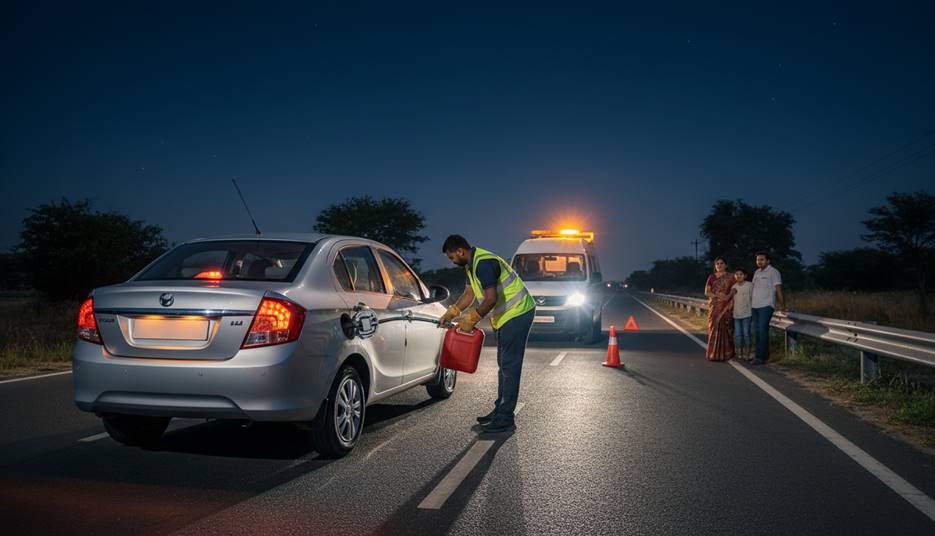
Every driver hates that feeling when the engine starts to sputter, the gas pedal stops working, and the fuel needle is stuck below empty. Being stuck with an empty tank is stressful, and if you are on a busy highway or a dark road, it can even be dangerous. It can happen to anyone, maybe your fuel sensor gave a wrong reading, or you just didn't realize how far away the next station was.
This is where Roadside Assistance (RSA) comes in to save the day. Instead of trying to walk to a station, which is risky- RSA sends a professional to you with enough fuel to get you moving again. You can get back on the road, drive to the nearest station, and finish your trip without needing an expensive tow truck.
It might seem like a simple mistake, but there are many reasons why even careful drivers run out of fuel:
- Traffic and Idling: Being stuck in heavy traffic or leaving the car running while parked (especially with the AC on) uses more gas than you might realize.
- Weather Conditions: In very hot weather, the AC works harder and uses more fuel. In cold weather, idling the car to stay warm also drains the tank.
- The "Distance to Empty" is Just a Guess: Your car’s computer predicts how far you can go, but it doesn't know if you’ll hit traffic or drive up a steep hill, which uses more gas.
- Old Sensors: As cars get older, the fuel gauge might not be 100% accurate. It might show you have a "quarter tank" when you are actually almost empty.
- Unfamiliar Roads: On long trips, gas stations might be further apart than you expected, or the one you planned to stop at might be closed.
How Fuel Delivery Help Works
Fuel Delivery Roadside Assistance is an emergency service. It is meant to give you just enough gas to reach a real station, not to fill up your whole tank.
Here is how it usually works:
- You Call for Help: You tell the RSA team where you are and if your car takes Petrol or Diesel.
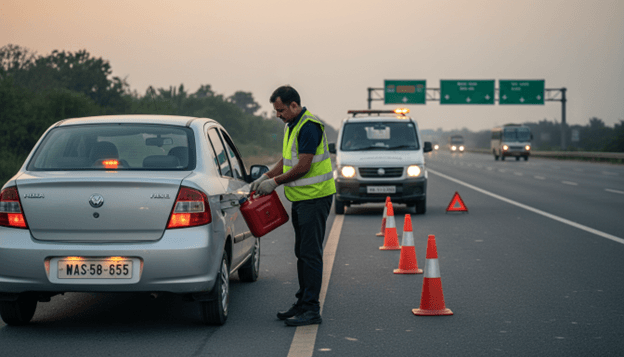
- A Technician is Sent: A professional arrives with fuel in a safe, approved container.
- Safety First: They park safely, turn on hazard lights, and might put out orange cones to protect you from passing traffic.
- Refilling: They put the fuel in your car so you can start the engine and drive to the nearest pump.
If the car still won't start, the technician can help figure out if the problem is something else, like a dead battery, so you aren't left guessing.
Safety Rules for Delivering Gas
You can't just pour gas from a water bottle into a car. Gasoline and diesel are dangerous because they can catch fire easily. RSA professionals follow strict rules to keep you safe:
- Special Containers: They use airtight, metal or heavy-duty plastic cans that won't leak or let out dangerous fumes.
- Spill Control: Technicians are trained to pour carefully so no fuel spills on the hot engine or the ground.
- Creating a "Buffer Zone": They park their service van in a way that blocks you from oncoming traffic while they work.
- Checking for Dangers: They check for leaks or the smell of fumes before they start, making sure a small problem doesn't turn into a fire.
Petrol vs. Diesel: Why the Difference Matters
Both types of cars can run out of fuel, but they act differently when you try to restart them:
- Petrol Cars: These are usually easy. You put in a few liters, turn the key a few times, and the car starts right up.
- Diesel Cars: These are a bit more complicated. If a diesel tank goes completely dry, air can get stuck in the fuel lines. Even after adding fuel, the engine might not start. A professional Emergency Fuel Delivery Service knows how to "prime" the engine to get the air out so it can start again.
What You Should Know About Costs and Limits
There are usually two parts to the cost:
- The Service: Your RSA plan often covers the cost of sending the person to help you.
- The Fuel: You usually have to pay for the actual liters of gas they put in your car.
There are also a few common limits:
- Small Amount: They only bring enough to get you to the next station (usually 5 to 10 liters).
- Usage Limits: Most plans only let you use this service a few times a year so people don't use it as a "mobile gas station" for convenience.
- Safety First: If you are parked in a very dangerous spot (like a blind curve), they might tow you to a safer place before adding the fuel.
Why RSA is Better Than Doing It Yourself
It is tempting to try and fix the problem yourself, but Out of Fuel Roadside Assistance is much better for these reasons:
- Stay Safe: Walking on the side of a busy highway is very dangerous. It is much safer to stay inside your locked car until help arrives.
- No Mistakes: In a panic, you might accidentally put the wrong fuel in your car. RSA makes sure you get exactly what your engine needs.
- The Right Tools: Most gas stations won't lend you a gas can. RSA comes prepared with everything needed.
- Fast Results: You don't have to figure out how to get to a station and back. One call solves the whole problem.
What to Do if You Run Out of Gas Right Now:
- Turn on your hazard lights immediately.
- Pull over to the shoulder or the far left side of the road.
- Stay away from traffic. If you get out, stand behind the metal guardrail.
- Don't keep trying to start the car if it's empty; you will just drain the battery.
- Call for RSA and give them your exact location.
Conclusion: A Safe Way to Get Moving Again
Running out of gas is a headache, but it doesn't have to ruin your whole day. With the right help, it’s just a short delay rather than a major disaster. Global Assure specializes in turning these stressful breakdown moments into safe restarts. By providing professional Fuel Delivery Roadside Assistance, Global Assure ensures you don't have to take risks on the side of the road or handle dangerous fuels yourself. Whether you are stuck in the middle of the city or on a quiet highway, Global Assure is your reliable partner to get you back on your journey quickly and safely.
Call for help right away:
- Fuel Delivery Roadside Assistance: 1800
- Emergency Fuel Delivery Service: 3500
- Out of Fuel Roadside Assistance: 1200