 18005723861
 WhatsApp Us
 Follow us on LinkedIn
 Follow us on Instagram
 Follow us on Facebook
Why Jewellers Are Adding Jewellery Protection to Their Sales Journey
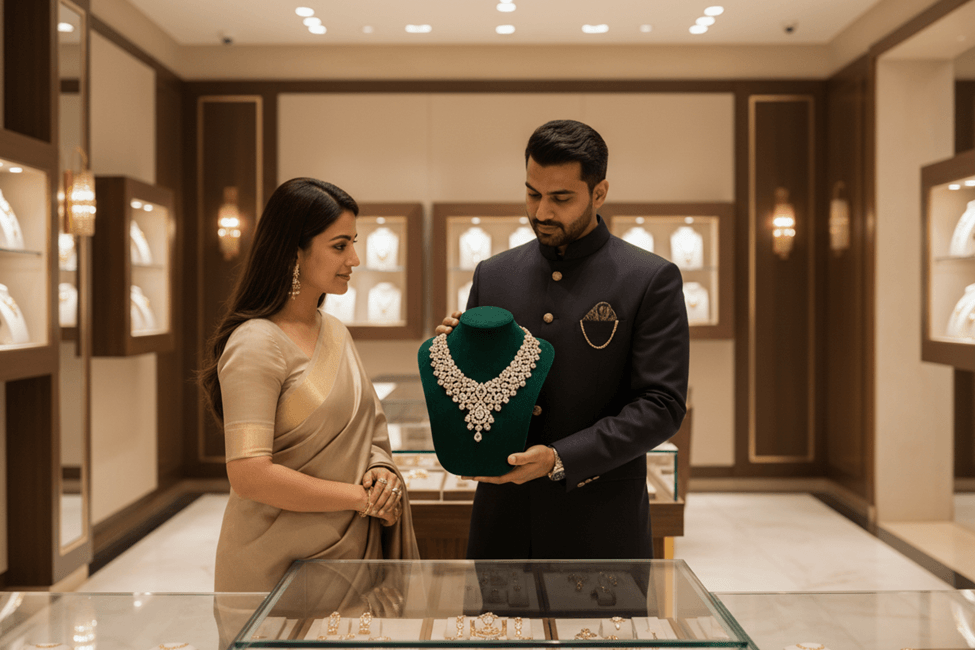
You have a customer at your counter who is looking at a necklace that costs ₹5 lakh. She wants to buy, but then she stops. "What if it breaks?"
That one question could make or break the deal. This is where jewelry protection for jewelers really helps. In India's competitive jewelry retail market, smart jewelers are learning that offering full protection plans isn't just an extra service; it's a smart move that builds trust with customers, speeds up sales, and keeps customers coming back for more.
What is jewelry protection as a service that is worth the money?
A regular warranty is not enough to protect your jewelry. Warranties cover problems with the way things are made. Protection plans cover what customers are most worried about: damage that happens by accident, normal wear and tear, and the ongoing care their valuable items need.
Consider it full care for the jewelry's entire life. Resetting stones, resizing rings, tightening prongs, polishing, soldering chains, and replacing clasps are all things that keep jewelry looking new for a long time.
The jewelry valuation system shows that people need to pay 1 to 2 percent of the total jewelry value every year for this level of security.
How to Get Jewelry Customers to Trust You
Trust functions as the primary requirement which all jewelry businesses must fulfill. Customers who spend ₹3 lakh, ₹5 lakh, or more on a single item are making a big financial commitment, usually for important events or family heirlooms.
Jewelers demonstrate their trustworthiness through the protection of their jewelry because they provide this assurance. The protection you provide for customers will create a long-lasting relationship which shows your commitment to the product for its entire lifespan. Protection makes people less anxious about buying by making them feel like the risk is lower. This is even more important in India's jewelry market, where people expect to pass down jewelry from one generation to the next.
Most standard homeowners insurance policies only cover jewelry worth ₹1–2 lakh. That leaves a big hole in protection for things that cost a lot of money. When you offer full coverage, you fill that gap.
When customers use protection services like resizing, cleaning, or tightening stones, they come back to your store. Research shows that customers who come back are 67% more likely to buy again. Protection plans keep the connection going that turns people who buy things once into loyal fans.
Adding jewelry protection as a service to boost sales
That moment of doubt when you buy something? It goes away with protection plans. When you buy something expensive, you naturally feel anxious. People think, "What if it breaks?" What if the prong comes off? What if I need it to be bigger? These "what if" questions make things worse.
Jewelry protection as a value-added service stops these problems from happening in the first place. Retailers that sell protection plans have seen an 11% rise in conversion rates and a 32% attach rate for these plans. Some jewelers have seen their average order values rise by 15%.
For instance, a customer is considering a bridal set that costs ₹5 lakh but hasn't made up their mind yet. The price is good and the design is great, but they are still not sure. You explain your protection plan, which covers all accidental damage, includes lifetime maintenance, and lets you resize the item as needed. The risk suddenly seems like it can be handled. The sale is done.
Getting Your Name Out There in a Competitive Market
India has a lot of stores that sell jewelry. Prices are very competitive. Design differences only work to a point when customers can find similar styles in a lot of stores.
Smart jewelers are winning by providing a variety of services. Your competitors sell jewelry, but you can take care of all kinds of jewelry. High-end customers want more than just the best item; they also want the best service and ongoing help. Jewelry protection for jewelers turns you into more than just a seller; it turns you into a full-service partner.
Most jewelers in the area don't have formal protection plans yet. People who adopt early really do have an advantage over others. When customers look at different stores, full protection is a big part of their choice.
How Keeping Customers Affects the Jewelry Business
It costs five times as much to get new customers as it does to keep old ones. But many jewelers only care about getting new customers. Protection plans change this. They create structured, long-term relationships that keep customers interested in your brand. Only 8% of your customers are loyal, but they account for 41% of your sales.
Offering protection as part of your jewelry store service keeps customers coming back for a long time. Protection makes sure that you have regular check-ins, like yearly check-ups, cleaning appointments, and inspection visits. People who have good experiences with protection become advocates. Research shows that protection plans can increase a customer's lifetime value by 66%.
Getting Started: How to Make Your Sales Process Safer
When you make protection plans, you don't have to start from scratch. Work with well-known insurance companies or third-party protection platforms that handle claims and other administrative tasks.
After you know how much the jewelry is worth, but before you buy it, add protection. Teach your workers how to talk about the benefits of protection without sounding like they're trying to sell you something. Trust is built by being open and honest. Make sure the terms are easy to understand and find.
Final Thoughts
Jewelry protection services for jewelers extend beyond insurance because they function as a strategic business approach which establishes customer trust and increases sales while securing customer loyalty. In India's competitive jewelry market, protection sets you apart as a modern jeweler who cares about your customers.
Jewellers who believe in protection will see long-term growth, better relationships with customers, and a real edge over their competitors. Are you ready to learn how protecting jewelry can help your store stand out and help you make lifelong friends with customers? First, you need to know what people who buy jewelry these days want from stores.
Commonly asked questions
What is jewelry protection, and how does it differ from a warranty?
Jewelry protection covers damage that happens by accident and normal wear and tear, like stones coming loose, prongs wearing down, and other damage that happens every day. Warranties only cover problems with the way something was made. Protection is the middle ground between full insurance and warranty coverage. It takes care of jewelry needs in the real world over time.
Should you offer your customers jewelry insurance?
Yes, especially for things that cost more than ₹50,000. The cost is very low, usually only 1–2% of the value of the jewelry each year, but the peace of mind is very high. Most homeowners insurance policies only cover jewelry worth ₹1–2 lakh, which isn't enough for expensive pieces. The protection service fills the existing gap and demonstrates to customers that you understand their need for financial security.
Will offering protection plans help me sell more?
Yes. People are less worried about buying things when they know they are safe. At the point of sale, protection plans answer the question, "What if it gets broken?" Retailers that offer protection have seen their conversion rates go up by 11%, and their average order value goes up by 15%.
Is it really an upsell to offer jewelry protection, or do people really want it?
People who buy a lot of jewelry, especially those who spend more than ₹3 lakh, are always looking for ways to protect themselves. When protection really takes care of customers' worries about damage and upkeep, it's not an upsell; it's a service that premium buyers expect and often ask for.
Do only large retail stores possess the ability to sell protection plans, or can independent jewelers also provide this service?
All jewelers, regardless of their business size, possess the ability to offer protection services. You should partner with established insurance companies and protection providers instead of creating your own system from the ground up. This enables smaller jewelers to deliver superior customer service and compete successfully against larger retail stores.