 18005723861
 WhatsApp Us
 Follow us on LinkedIn
 Follow us on Instagram
 Follow us on Facebook
Why Silver Jewellery Also Needs Protection
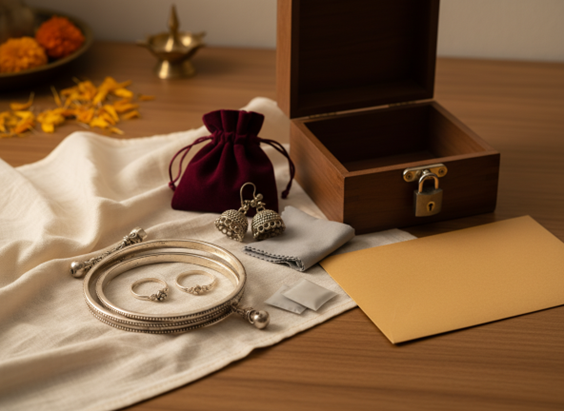
The break-in stole Ananya's grandmother's silver payal (anklet), which was worth more than the ₹8,000 market value. That fragile heirloom had made noise at every family wedding, holiday, and important event for sixty years. While insurance couldn't bring back those memories, it could help with the financial burden that comes with losing something irreplaceable.
A lot of people don't know this, but silver jewellery can break just as easily as gold and diamond jewellery, especially if you wear it every day. You should take care of your silver jewellery the same way you do your gold jewellery. Chemicals can damage it during the monsoon season, and it can be broken by accident in crowded metros. This guide explains why it's important to take care of your silver jewellery and get full insurance for it, especially for the pieces you can't live without.
The Growing Demand for Silver Jewellery in India
Your grandmother used to give you silver jewellery, but now you wear it all the time. Young professionals wear thin silver necklaces in layers to work. College students wear oxidized silver rings stacked at festivals. Brides even include modern silver jewellery in their wedding trousseau so they can wear it every day after the wedding.
People like sterling silver (92.5% pure) because it is versatile and affordable. You can buy many statement pieces, like bold cuffs, layered chains, and stackable rings, and try out trends that would cost a fortune in gold. The silver jhumkas you wore to meet with a client on Monday look just as good at your friend's sangeet on Saturday.
This trend in fashion jewellery has inspired cool new styles. Silver complements all kinds of aesthetics, from simple Scandinavian-inspired designs to tribal jewellery from Rajasthan and temple work from South India. Oxidized silver has a rugged beauty that pairs well with handloom sarees, while sterling silver with a mirror finish looks elegant with Western formal wear. This metal is a must-have in modern Indian closets because of its adaptability.
It's even more important to take care of silver jewellery as it transitions from "once in a while" to "everyday essential." Items you wear every day are much more likely to get lost or stolen than things kept safely in a bank locker.
Why Silver Needs More Attention Than Gold
Precious metals have different vulnerabilities. Silver needs different care and, frankly, different insurance than gold. While gold stays shiny for years, silver is more reactive. Here is why:
Tarnishing and sensitivity to chemicals
Sulfur is the enemy of silver. When silver touches sulfur compounds in the air, it turns into silver sulfide—the dull gray-black coating we call tarnish. This process happens much faster in India's humid climate. If you don't store a silver necklace properly during Mumbai's monsoon, it can tarnish in just a few days.
Silver also reacts with lotions, sunscreens, perfumes, and the chlorine in swimming pools or tap water. Even sweat can cause tarnish spots. While regular cleaning can remove tarnish, neglecting it can ruin delicate designs permanently. Complicated filigree patterns or fine granulation work may require expensive professional restoration if the tarnish becomes too deep. You can prevent this by learning how to take care of silver jewellery.
Softer metal is more prone to damage
Sterling silver (92.5% silver and 7.5% copper) is much softer than 18K gold. While this softness makes it easy for artisans to work with, it also means it breaks easily. Prongs holding stones can bend, zippers on laptop bags can snag thin chains, and ring shanks can get bent out of shape from accidental impacts.
Think about your daily routine. Your silver ring hits the edges of your desk, the steering wheel, and kitchen counters. Your bracelet absorbs the shock every time you rest your arm. Silver shows the stress of these "little injuries" much more than gold does.
"Cheap" Doesn't Mean "Easy to Replace"
This is a common misconception: silver is cheaper than gold, but it can be incredibly hard to replace specific pieces. That set of temple jewellery from Chettinad made by a master craftsman, a modern style from a jeweler who is no longer in business, or a tribal kada bought years ago in Jaipur—these are unique.
It's not just the weight of metal that matters; it's the skill and the design. Insurance will cover financial loss, but finding a craftsman to recreate a unique design takes time and effort. That is the real cost of being unprepared.
Daily Risks to Your Everyday Silver
Before you even finish your morning coffee, your everyday silver is at risk. Let’s look at the common scenarios:
On your way to work
Crowded metros or local trains pose a risk of theft or accidental snagging. Chain-snatching incidents often increase during festivals. Even an auto-rickshaw ride can be risky if your jewellery hits a hard surface during a sudden stop.
In the office
Your pendant can get caught on your crossbody bag. Rings hit the desk as you type or reach for files. Hand sanitizers and soaps speed up tarnishing, and jewellery can be dropped down drains in shared restrooms.
Around the house
Cooking involves turmeric, which can stain, and steam/heat from pressure cookers speeds up oxidation. Household cleaners and dish soaps are harsh on silver.
Social life and fitness
Sweat at the gym makes silver tarnish faster, and chlorine in pools is highly damaging. Even a crowded restaurant can lead to accidental pulls on delicate chains.
Daily wear means daily vigilance.
Taking Care, Storing, and Insuring Your Silver
Smart protection is two-fold: stopping damage before it happens and covering disasters that cannot be prevented.
The first line of defense: preventive care
Basic storage
Put each piece in its own cloth pouch to prevent scratches and tarnish. Use silica gel packets to soak up moisture, especially in coastal cities like Chennai, Mumbai, and Goa.
Daily habits
Follow the "last on, first off" rule. Put on jewellery after makeup and perfume, and take it off as soon as you get home. Wipe each piece with a soft cloth before storing it to remove skin oils.
Regular maintenance
Check clasps, prongs, and chain links once a month. Clean silver with mild soap and water every other week. A professional inspection twice a year can catch loose stones or thinning chains before they break.
The second line of defense: insurance
You can't stop every theft, fire, or accident. This is where insurance becomes financially necessary.
Jewel Protect: Full Coverage Plans for Silver Jewellery
Jewel Protect works with the India Bullion and Jewellers Association (IBJA) to offer specialized protection plans for Indian jewellery owners.
Why choose Jewel Protect for your silver?
Our plans go beyond basic insurance. You are protected from theft, fire, accidental damage, loss in transit, and even riots and strikes—an important consideration in India. Every policy includes professional advice on how to store and safeguard jewellery at home and in a bank locker.
Coverage that fits real life
Plans can be tailored—whether you want to protect one heirloom silver kada or an entire everyday collection of oxidized jewellery and modern designs. We understand that a ₹5,000 silver nose ring may mean more to you than someone else’s ₹50,000 gold chain.
An easy process
You can buy protection directly online or through 500+ partner jewelers across India. The claims process is designed to be quick and straightforward, and the support team understands the emotional stress of losing jewellery. Backed by IBJA, these plans are designed by experts who know the Indian market.
Frequently Asked Questions
What does silver jewellery insurance in India cover?
It usually covers theft, burglary, fire damage, accidental breakage, loss in transit, and natural disasters. Normal tarnishing and regular wear and tear are typically not covered.
How can I keep my silver jewellery clean?
Store silver in airtight pouches with silica gel. Clean it with mild soap and a soft cloth. Avoid harsh cleaners, and remove silver before showering, swimming, or applying lotions and perfumes. During monsoon season, take extra precautions against moisture.
Is everyday silver more likely to break?
Yes. Daily wear exposes silver to chemical exposure (perfumes, sanitizers, cleaners), physical impact (bags, desks, doors), and environmental stress (humidity and pollution), making damage more likely.
Is silver jewellery insurance cheaper than other types of jewellery insurance?
Often, yes. It typically costs around 0.5% to 2% of the jewellery’s value per year. For ₹30,000, that’s roughly ₹300–₹600 annually.
Can I claim insurance if silver is stolen from a bank locker?
Yes, if you have a jewellery insurance policy that covers such situations. Banks usually do not take responsibility for locker contents, so personal insurance is important.
Guard What Is Most Important
Your silver jewellery—whether it’s everyday studs, a three-generation heirloom kada, or a bold oxidized statement necklace—needs more than just careful storage. With the right care and insurance, you can wear it confidently, protected from both avoidable damage and unexpected loss.